


四虎91I国产肉体ⅩXXX137大胆I日韩avavI3级A片I亚洲精品偷拍I麻豆91精品人妻成人无码I亚洲天堂视频在线I91在线高清I污污污视频网站I中文字幕1区I91啦丨九色丨蚪窝人妻I美日AVI亚洲无aV在线中文字幕I久伊人I久久luI最美人妻-ThePornI91 から无套直看片红桃在线观看I嫩草视频91I奇米777第四色I欧美日

/ Home
/ About CTG
/ Green Life
/ Business
/ News & Media
/ Sustainability
Chinese
English

Hydropower playing bigger role in energy security

From: China Daily

Date: 2025-12-01
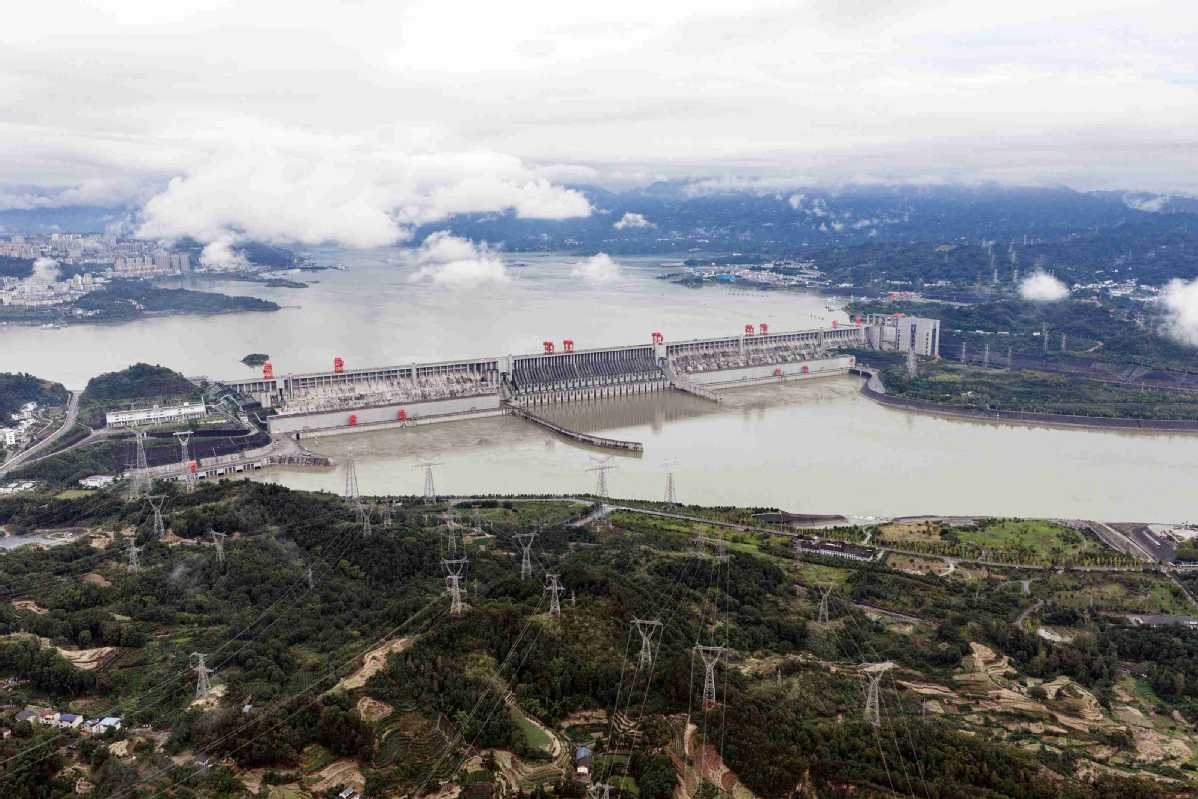
China's hydropower sector is poised to grow stronger and become a critical "cornerstone" in the nation's energy security and green transition, said industry experts, citing its robust regulatory capabilities amid soaring demand for new renewable energy.

Possessing abundant hydraulic resources, China has developed world-leading capabilities across the entire hydropower industrial chain, from surveying and design to engineering construction and equipment manufacturing, they added.

Hydropower is considered a vital and high-quality supporting power source for the electricity system, serving as both a non-fossil fuel and a crucial grid stabilizer, said Xiang Haiping, chief expert of China Energy Research Society.

Xiang said he believes that China still has potential for an additional 160 million kilowatts of hydropower development, as the country vows to peak carbon before 2030 and achieve carbon neutrality before 2060.

Future expansion will largely shift from central and eastern regions to the upper reaches of southwestern rivers, particularly in the Xizang autonomous region, he said during the recently-held Tongzhou Global Development Forum 2025.

Against this backdrop of increasing demand for flexible and stable power, China has, in recent years, significantly intensified its hydropower development.

Leveraging its world-leading expertise across the entire industrial chain, Beijing has prioritized new projects and capacity expansion to bolster energy security and provide essential grid stability amidst the rapid growth of intermittent renewable sources.

The world's largest clean energy corridor, consisting of six mega hydropower stations on China's Yangtze River, has cumulatively produced over 4 trillion kilowatt-hours of power so far, according to its operator China Three Gorges Corp (CTG).

Consisting of Wudongde, Baihetan, Xiluodu, Xiangjiaba, the Three Gorges and Gezhouba, the corridor generated 235.1 billion kWh of electricity in the first three quarters of this year, it said.

It has significantly bolstered the safe and stable operation of the power grid during periods of high electricity demand and provided strong support for economic and social green development in China, said the company.

Spanning 1,800 kilometers, the green corridor boasts a total installed capacity of around 71.70 million kW and generates approximately 300 billion kWh annually.

With large power output and strong power regulation capacity, the clean energy corridor has played a key role in guaranteeing safe and stable operation of power grids and supporting implementation of the nation's west-to-east power transmission program.

In addition, China has announced the construction of a hydropower project in the lower reaches of the Yarlung Zangbo River, which will consist of five cascade hydropower stations with a total investment estimated at around 1.2 trillion yuan ($168.5 billion).

The project, according to Xiang, will further ensure domestic energy security.

Guo Bowei, associate professor at the School of Applied Economics at Renmin University of China, also warned of challenges that arise from the geographical distribution of hydropower resources in the southwestern parts of the country.

While China's main electricity demand centers are concentrated in the eastern coastal regions, transporting energy from the west to the east incurs high costs, underscoring the need for new pathways to ensure regional energy security, said Guo.

China's eastern regions should further prioritize enhancing grid flexibility and load response capabilities to meet evolving energy demands, while central and western areas need to strengthen the integrated development of new energy bases and computing centers, he said.

Guo suggested that the government should emphasize the need to bolster advanced technologies, including energy storage, hydrogen energy, smart grids and virtual power plants to ensure a more resilient and sustainable energy system nationwide.

By focusing on distinct regional needs and advancing key technological innovations, China should further optimize its energy distribution and consumption, particularly as demand from sectors like artificial intelligence continues to grow, he said.

Li Sheng, director-general of the China Renewable Energy Engineering Institute, echoed these thoughts, saying that hydropower units offer rapid start-up and shutdown, flexible operation and strong load-following capabilities, making them a crucial regulatory resource for the electricity system.

However, Li also pointed to growing complexities in hydropower development and external constraints.

Future power stations are mainly situated in challenging regions such as in the southwestern parts of China, which present more intricate construction conditions, diverse ecological sensitivities and complex issues like population resettlement, he said.

To address these challenges and maximize hydropower's potential, Li recommended accelerating the construction of major hydropower bases and key reservoir power stations.

All Copyrigh

By China Three Gorges Corporation

Reprinting or mirroring is strictly prohibited without written authorization,

and offenders will be held liable.
Hydropower playing bigger role in energy security

From: China Daily

Date: 2025-12-01

China's hydropower sector is poised to grow stronger and become a critical "cornerstone" in the nation's energy security and green transition, said industry experts, citing its robust regulatory capabilities amid soaring demand for new renewable energy.

Possessing abundant hydraulic resources, China has developed world-leading capabilities across the entire hydropower industrial chain, from surveying and design to engineering construction and equipment manufacturing, they added.

Hydropower is considered a vital and high-quality supporting power source for the electricity system, serving as both a non-fossil fuel and a crucial grid stabilizer, said Xiang Haiping, chief expert of China Energy Research Society.

Xiang said he believes that China still has potential for an additional 160 million kilowatts of hydropower development, as the country vows to peak carbon before 2030 and achieve carbon neutrality before 2060.

Future expansion will largely shift from central and eastern regions to the upper reaches of southwestern rivers, particularly in the Xizang autonomous region, he said during the recently-held Tongzhou Global Development Forum 2025.

Against this backdrop of increasing demand for flexible and stable power, China has, in recent years, significantly intensified its hydropower development.

Leveraging its world-leading expertise across the entire industrial chain, Beijing has prioritized new projects and capacity expansion to bolster energy security and provide essential grid stability amidst the rapid growth of intermittent renewable sources.

The world's largest clean energy corridor, consisting of six mega hydropower stations on China's Yangtze River, has cumulatively produced over 4 trillion kilowatt-hours of power so far, according to its operator China Three Gorges Corp (CTG).

Consisting of Wudongde, Baihetan, Xiluodu, Xiangjiaba, the Three Gorges and Gezhouba, the corridor generated 235.1 billion kWh of electricity in the first three quarters of this year, it said.

It has significantly bolstered the safe and stable operation of the power grid during periods of high electricity demand and provided strong support for economic and social green development in China, said the company.

Spanning 1,800 kilometers, the green corridor boasts a total installed capacity of around 71.70 million kW and generates approximately 300 billion kWh annually.

With large power output and strong power regulation capacity, the clean energy corridor has played a key role in guaranteeing safe and stable operation of power grids and supporting implementation of the nation's west-to-east power transmission program.

In addition, China has announced the construction of a hydropower project in the lower reaches of the Yarlung Zangbo River, which will consist of five cascade hydropower stations with a total investment estimated at around 1.2 trillion yuan ($168.5 billion).

The project, according to Xiang, will further ensure domestic energy security.

Guo Bowei, associate professor at the School of Applied Economics at Renmin University of China, also warned of challenges that arise from the geographical distribution of hydropower resources in the southwestern parts of the country.

While China's main electricity demand centers are concentrated in the eastern coastal regions, transporting energy from the west to the east incurs high costs, underscoring the need for new pathways to ensure regional energy security, said Guo.

China's eastern regions should further prioritize enhancing grid flexibility and load response capabilities to meet evolving energy demands, while central and western areas need to strengthen the integrated development of new energy bases and computing centers, he said.

Guo suggested that the government should emphasize the need to bolster advanced technologies, including energy storage, hydrogen energy, smart grids and virtual power plants to ensure a more resilient and sustainable energy system nationwide.

By focusing on distinct regional needs and advancing key technological innovations, China should further optimize its energy distribution and consumption, particularly as demand from sectors like artificial intelligence continues to grow, he said.

Li Sheng, director-general of the China Renewable Energy Engineering Institute, echoed these thoughts, saying that hydropower units offer rapid start-up and shutdown, flexible operation and strong load-following capabilities, making them a crucial regulatory resource for the electricity system.

However, Li also pointed to growing complexities in hydropower development and external constraints.

Future power stations are mainly situated in challenging regions such as in the southwestern parts of China, which present more intricate construction conditions, diverse ecological sensitivities and complex issues like population resettlement, he said.

To address these challenges and maximize hydropower's potential, Li recommended accelerating the construction of major hydropower bases and key reservoir power stations.

All Copyrigh

By China Three Gorges Corporation

Reprinting or mirroring is strictly prohibited without written authorization,

and offenders will be held liable.

Contact Us
Address :No. 1 Liuhe Road, Jiang'an District, Wuhan City, Hubei Province, China

Site Map

Link

Copyright 2022-2026 - China Three Gorges Corporation. All rights reserved.
Copyright 2022-2026 - China Three Gorges Corporation.
主站蜘蛛池模板: а√天堂中文在线资源库免费观看| 欧美国产亚洲日韩在线二区| 欧美日产国产精品日产| 亚洲无码视频在线| 精品少妇人妻av免费久久洗澡| 亚州中文字幕无码中文字幕| 欧美熟妇色ⅹxxx欧美妇| 中文字幕精品亚洲字幕资源网| 亚洲一区二区三区成人网站| 日韩精品免费一线在线观看| 国产天堂亚洲国产碰碰| 亚洲一区二区三区在线观看精品中文| 国内精品人妻无码久久久影院蜜桃| 日本真人添下面视频免费| 国产亚洲精品久久久闺蜜| av大片在线无码永久免费网址| 精品久久香蕉国产线看观看亚洲 | 亚洲看片lutube在线观看| 中文字幕久热精品视频在线| 一区二区三区av波多野结衣| 强伦人妻一区二区三区视频18| 国产成人精品999视频| 国产av国片精品一区二区| 欧美另类在线制服丝袜国产| 欧美日韩午夜群交多人轮换| 欧美综合区自拍亚洲综合绿色| 国产精品久久久久久久久软件| 午夜成人性爽爽免费视频| 亚洲一区二区三区播放| 麻豆国产av穿旗袍强迫女佣人| 尤物精品视频无码福利网| 日本韩国的免费观看视频| 亚洲精品色在线网站| 色欲网天天无码av| 92精品成人国产在线观看| 无码av不卡一区二区三区| 中文字幕免费不卡二区| 99国产欧美精品久久久蜜芽| 无码精品a∨在线观看十八禁软件| 久久久久久a亚洲欧洲av冫| 欧美性猛交xxxx免费看蜜桃 |